A few years ago I took a PDE course. We were learning about something to do with elliptic pseudodifferential operators and the speaker drew a commutative diagram on the board and said, “You see, this comes from a short exact sequence –” and the whole room started laughing in discomfort. The speaker then remarked that Craig Evans himself would ban him from teaching analysis if word of the incident ever leaked, which might have something to do with why I have not disclosed the speaker’s name 🥵
Before recently, I found topology to be quite a scary area of math. It is still very much my weakest suit, but I should like to have some amount of competency with it. I have since come around to the viewpoint that cohomology is just a clever gadget for counting solutions of PDE. This has made the pill a little easier to swallow, and makes the previous anecdote all the more awkward.
As part of my ventures into trying to learn topology, in this post I will give a proof that the genus of any compact Riemann surface is finite. I am confident that this proof is not original, because it’s sort of the obvious proof if an analyst trying to prove this fact just followed their nose, but it seems a lot more natural to me than the proof in Forster, so let’s do this.
[Since the time of writing, I have made some corrections to incorrect or confusing statements. Thanks to Sarah Griffith for pointing these out!]
Let us start with some generalities. Fix a compact Riemann surface  , references to which we will suppress when possible. Let

be a short exact sequence of sheaves. In our case, the sheaves will be sheaves of Fréchet spaces on , which might not be homologically kosher, but that won’t cause any real issues. Then we get a long exact sequence in cohomology

If  is a fine sheaf, i.e. it has partitions of unity subordinate to every open cover, then
  and the long exact sequence collapses to the exact sequence

In particular, the morphism of sheaves  induces a bounded linear map
  such that
  is the kernel of
  and
and  is the cokernel of . Now, if is a Fredholm operator, then its index
  satisfies

Let  denote the sheaf of holomorphic functions on and
  the Cauchy-Riemann operator. Let
  denote the sheaf of smooth functions on ; since has enough partitions of unity, is a fine sheaf. The maps
  , for
, for  open, induces a short exact sequence of sheaves of Fréchet spaces

and hence an exact sequence in cohomology

Here we used Liouville’s theorem. On the other hand, the dimension of  is by definition the genus
  of . Therefore, if is the Fredholm index of , then

It remains to show that is well-defined and finite; that is, is Fredholm. This is a standard elliptic regularity argument, which I will now recall. We first fix a volume form  on , which exists since is an orientable surface. This induces an
  norm on , namely
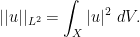
Unfortunately the usual Sobolev notation  clashes with the notation for cohomology, so let me use
  to denote the completion of under the norm

where  ranges over multiindices. Then
  and maps
  . The kernel of is finite-dimensional (since it is isomorphic to
  , by Liouville’s theorem and Weyl’s lemma), so to deduce that is Fredholm as an operator it suffices to show that the cokernel of is finite-dimensional.
We first claim the elliptic regularity estimate

for any smooth functions  which satisfy
  . By definition of the Sobolev norm, we have

Without loss of generality, we may assume that  is smooth. Then we can write
  where
where  and
and  are holomorphic. In particular,
  and
and  , so
, so

The only troublesome term here is  . Taking a Cauchy estimate, we see that

But is compact, so has finite volume; therefore

This gives the desired bound.
Let  be a sequence in
  with
with  , and assume that the
  are Cauchy in
  . Without loss of generality we may assume that
  where
where  is the kernel of . If the are not bounded in , we may replace them with
  , and thus assume that they are in fact bounded. By the Rellich-Kondrachov theorem (which says that the natural map is compact), we may therefore assume that the are Cauchy in . But then

so the are Cauchy in . Therefore the converge in  , hence the converge in the image
  of , since gives an isomorphism
  . Therefore is closed.
If one applies integration by parts to , the fact that  has no boundary implies that for any
  ,
,

and thus  . Since
  is closed, the dual of the cokernel of is the kernel
  of
of  ; by the Rellich-Kondrachov theorem, the unit ball of is compact and therefore is finite-dimensional. By the Hanh-Banach theorem, this implies that the cokernel of is finite-dimensional. Therefore and hence is finite.

 some compact thoughts
One thought on “Elliptic regularity implies that compact genera are finite”